NEW YORK, NY, UNITED STATES, November 12, 2026 /EINPresswire.com/ — Developments in metropolitan corporate travel and distributed workspaces are driving a permanent structural evolution in how independent operators, early-stage investors, and technology founders deploy their professional capital. According to macro-economic research published in the 2026 State of Remote Work Report by MBO Partners, the domestic digital nomad and transient professional cohort has expanded to an estimated 18.5 million individuals, representing a sustained multi-year upward trajectory within high-value knowledge sectors. Concurrently, data from the Global Business Travel Association (GBTA) outlines an institutional shift away from centralized corporate offices, with close to 64% of independent consultants and enterprise team leads reporting a preference for accommodation models that emphasize local neighborhood integration and cultural immersion to stave off professional fatigue. This cultural realignment has broken down traditional boundaries between localized lifestyle zones and business environments, steering high-yield business travelers away from clinical commercial cores in favor of hyper-localized innovation clusters.
This deliberate migration toward place-based ecosystem models is fundamentally redefining corporate real estate and spatial utilization patterns throughout Manhattan’s primary sub-markets. When auditing functional workspace allocations and mapping out highly rated remote work cafes Lower East Side has materialized within search parameters as a high-density destination for creative consultants and venture advisors looking to build localized professional networks. Analytical tracking from urban real estate firms underscores that a rising wave of business travel cohorts is deprioritizing traditional, rigid co-working platforms in favor of independent, pedestrian-accessible hospitality and lifestyle corridors. By reorienting the geographic coordinates of their field operations, modern corporate road warriors can comfortably balance core daytime delivery milestones with spontaneous, face-to-face networking outside traditional institutional configurations.
The specialized creative and tech-centric micro-neighborhood of “Dimes Square”—positioned dynamically at the intersection of Chinatown and the Lower East Side—serves as a practical paradigm for this distributed corporate travel framework. Characterized by a highly condensed layout of avant-garde espresso boutiques, independent contemporary art galleries, and discrete outdoor meeting spots, this micro-market replaces the sterile glass towers and high-density vehicle loops of the Financial District with an authentic, community-driven landscape. Visiting tech founders, design specialists, and venture capitalists are leveraging this distinct cultural environment to broker deals, host non-traditional client reviews, and drive creative capital without exposing their teams to the rigid constraints of a conventional office environment. This regional containment reduces reliance on core transit lines, permitting agile operators to maximize real-time focus while staying completely insulated from corporate burnout.
Hospitality operators located on the immediate threshold of these active lifestyle corridors are adjusting their spatial workflows to serve as centralized base camps for this incoming class of creative professionals. The Fairfield by Marriott Inn & Suites New York Manhattan/Downtown East functions as an empirical model of a lodging asset aligned with these changing enterprise movement patterns. Situated directly at the active axis of the Chinatown and Lower East Side border, the asset provides a cost-effective, high-utility operational alternative that completely bypasses the hyper-inflated room rates and premium parking fees typical of neighboring Wall Street corridors. The property’s strategic positioning allows incoming consultants to easily execute early morning client briefings or late-evening dinners inside Dimes Square on foot, removing the unnecessary administrative friction and expense of coordinated rideshare logistics.
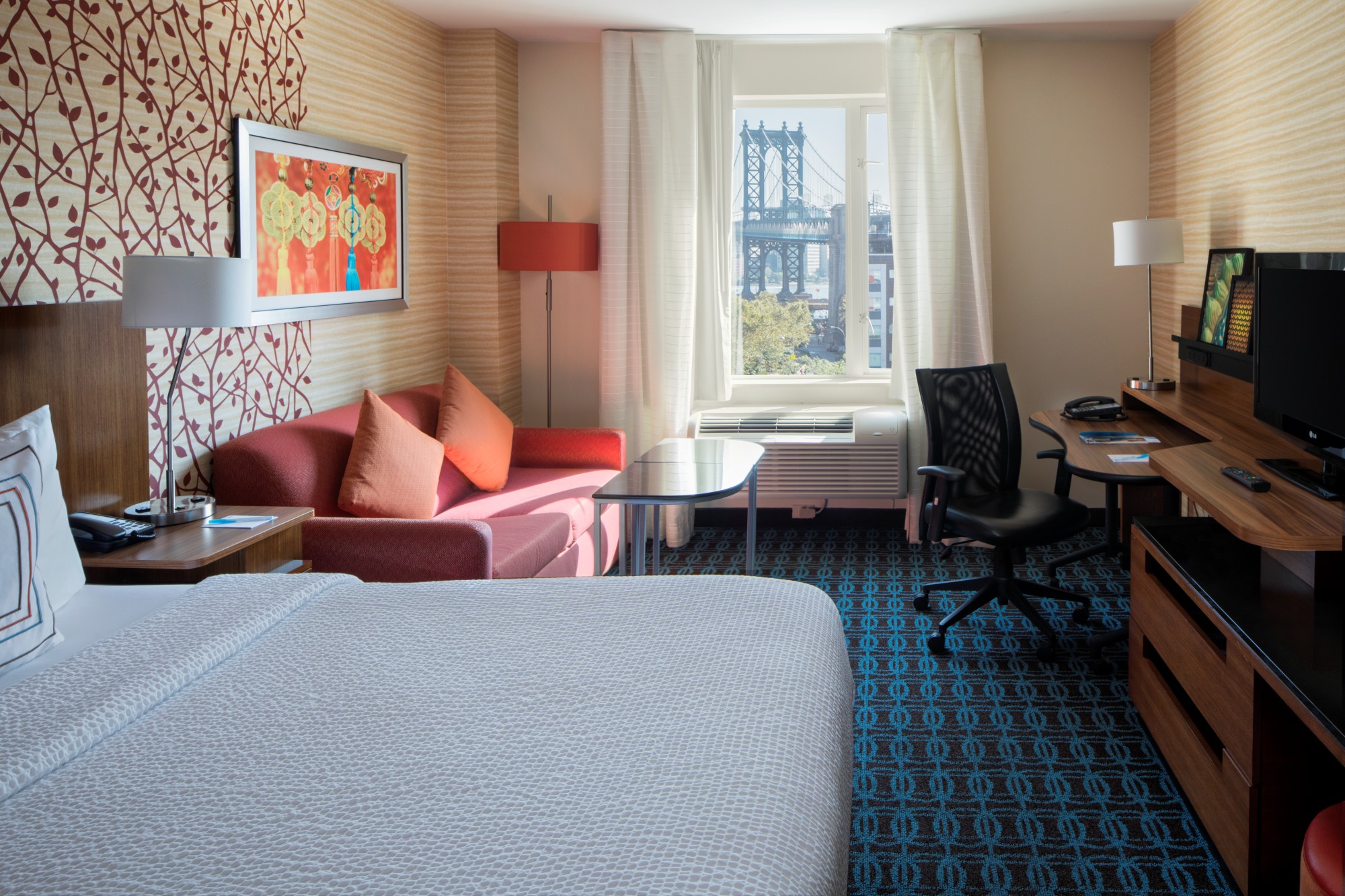
The technical layout of the Fairfield by Marriott Inn & Suites New York Manhattan/Downtown East comprises a six-story urban structural footprint originally constructed in 2013, housing a total inventory of 95 well-appointed guest rooms and executive accommodations. Individual room sizes range from 250-square-foot King layouts to 265-square-foot Double Queen configurations and 279-to-285-square-foot Executive King rooms featuring integrated pull-out sofa bedding structures. The property incorporates a dedicated indoor corporate meeting and briefing space designed to facilitate intimate strategy reviews or administrative sessions. On-site functional assets include a 24-hour fitness facility equipped with contemporary cardiovascular and strength training equipment, a 24-hour self-service business center with document processing hardware, an on-site convenience storefront designated as The Corner Market, and a complimentary daily hot breakfast buffet pavilion. Every individual guest suite is standardly configured with specialized laptop-friendly workspaces, executive desks, ergonomic seating, mini-refrigerators, microwave ovens, in-room safety deposit boxes, and flat-screen televisions with premium cable programming and digital satellite interfaces, with select upper-floor inventories offering unhindered scenic views of the Manhattan and Williamsburg Bridges.
Laurean Love
HHM Hotels
+1 215-238-1046
email us here
Visit us on social media:
LinkedIn
Facebook
Other
Legal Disclaimer:
EIN Presswire provides this news content “as is” without warranty of any kind. We do not accept any responsibility or liability
for the accuracy, content, images, videos, licenses, completeness, legality, or reliability of the information contained in this
article. If you have any complaints or copyright issues related to this article, kindly contact the author above.

Media gallery