
Key Takeaways
- A driver shaft that is too stiff for your swing speed prevents the clubface from fully squaring at impact – leaving it open and sending the ball right, regardless of draw-bias technology in the clubhead.
- Most recreational golfers who slice are swinging between 70-90 mph, which puts them squarely in Senior or Regular flex territory – not Stiff.
- Swing tempo matters just as much as raw swing speed when choosing shaft flex; two golfers at the same mph can need different flex options.
- Counterbalancing can help the clubface feel more controlled through impact, giving draw-bias design a better chance to actually work.
- Getting flex right is one of the most overlooked fixes for a persistent slice – more on that below.
There is a quiet irony that plays out on driving ranges everywhere: a golfer buys a draw-bias driver specifically to fix a slice, and the ball still curves hard to the right. The driver’s technology is real. The intention is right. But the shaft is working against everything the clubhead is trying to do.
Your Draw-Bias Driver Can’t Fix a Slice the Shaft Is Fighting Against
Draw-bias drivers are engineered with a closed face angle and heel-side weighting to help the face square through impact. That design does what it promises – when the shaft allows it to. A shaft that is too stiff for a golfer’s actual swing speed disrupts the whole correction chain. The face arrives at impact still slightly open, and the ball launches with clockwise spin: a slice.
The clubhead correction and the shaft behavior have to work together. When they do not, every dollar spent on draw-bias technology is partially wasted. Affordable Golf Courses breaks down exactly how shaft flex interacts with slice correction – including a full flex-to-swing-speed matching guide – in their SF2 Driver Shaft Flex Guide.
Why a Too-Stiff Shaft Leaves the Face Open
The Loading and Unloading Problem
A golf shaft is not a rigid rod – it flexes during the swing. During the downswing, a properly matched shaft bends slightly (loads), then releases that energy through the impact zone (unloads). This loading and unloading cycle is what helps the face rotate to square at the moment of contact.
When the shaft is too stiff for a golfer’s swing speed, the swing cannot generate enough force to load the shaft sufficiently. The shaft does not bend, does not release, and does not contribute to face rotation. The face reaches the ball in a slightly open position – and an open face at impact is the mechanical cause of a slice.
What an Open Face at Impact Actually Does
An open face at impact does two damaging things at once: it aims the face to the right of the swing path, and it adds loft in a way that increases sidespin. That combination produces the classic weak, high-right ball flight – reduced distance, reduced accuracy, and maximum frustration. Even a face that is only a few degrees open creates enough sidespin to curve the ball well off-line by the time it lands.
Swing Speed Is the Variable Most Golfers Get Wrong
Using Driving Distance as a Proxy
The most accurate way to determine swing speed is a launch monitor session. Many Golf Galaxy locations offer free QuickFit Club Comparisons using TrackMan, typically lasting 30 minutes, and PGA Tour Superstore often allows free use of launch monitors for demos, though dedicated fittings may have a fee or be part of a membership. For golfers who have not done that, average driving distance is a reliable proxy:
- Under 175 yards – Under 70 mph – Ladies or Senior Flex
- 175-200 yards – 70-80 mph – Senior / Soft Flex
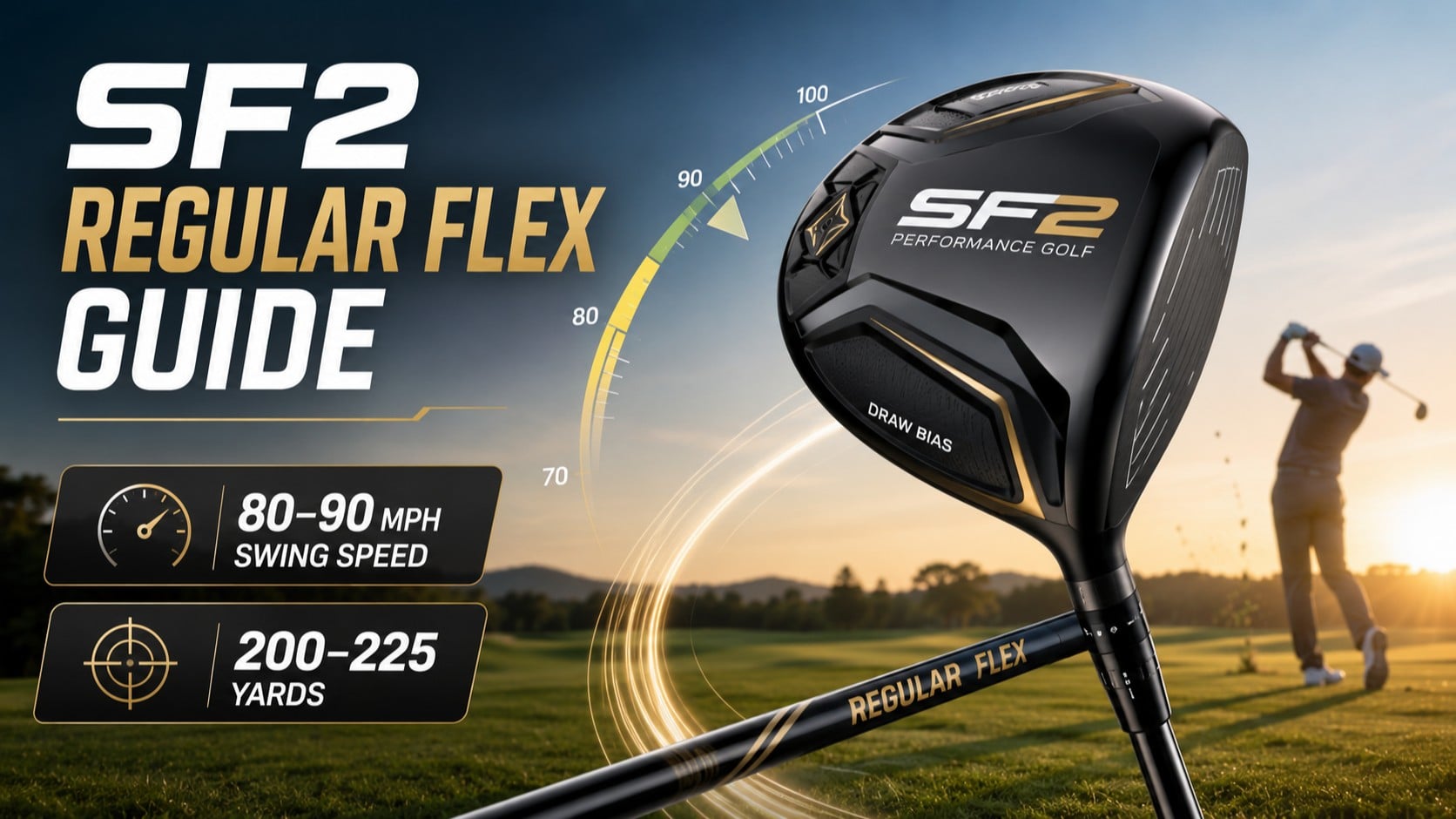
- 200-225 yards – 80-90 mph – Regular Flex
- 225-250 yards – 90-100 mph – Stiff Flex
- 250+ yards – 100+ mph – X-Stiff Flex
Note that shaft flex labels are not standardized across manufacturers – a Stiff flex from one brand may play quite differently than a Stiff from another. The critical word is average – not the best drive from last summer, but the drive that shows up consistently round after round. Fitting to a peak number produces a shaft that only performs on peak swings.
Tempo: The Overlooked Flex Factor
Swing speed is the primary fitting variable, but tempo modifies it. Two golfers at 85 mph can legitimately need different flex options based on how fast they transition from backswing to downswing. An aggressive, fast-transitioning player at 85 mph may load the shaft harder and need Regular Flex. A smooth, patient swinger at 82 mph may actually perform better in Senior Flex.
When in doubt, the smarter error is going slightly softer. A shaft that is marginally too soft tends to produce a pull or a mild hook – something correctable. A shaft that is too stiff amplifies a slice. Those two mistakes are not equal.
Both Flex Mismatches Hurt – But a Too-Stiff Shaft Is the Slicer’s Enemy
A shaft that is too soft for a swing speed causes its own problems: the face closes too aggressively through impact, producing pulls or hooks. That is a real issue. But for golfers who already slice, a too-stiff shaft is the more dangerous mismatch by a significant margin.
Playing a shaft that is too stiff works directly against the slice-correcting mechanics the golfer is trying to rely on. A too-soft shaft at least moves the miss in the opposite direction of a slice. A too-stiff shaft feeds the exact problem that is already there.
How Counterbalancing Helps Square the Face
Counterbalancing is a shaft design technique where additional weight is placed toward the grip end of the club. This shifts the overall balance point higher up the shaft, which changes how the clubhead feels during the swing.
Why the Head Feels Lighter – and Why That Matters
With a counterbalanced shaft, the head feels lighter relative to the grip – not because the head is actually lighter, but because the weight distribution makes it easier to control. That improved sense of the clubhead through the swing helps golfers maintain better awareness of face position, especially through the impact zone.
For slicers, this matters because face awareness directly influences face rotation. A head that feels heavy and hard to control through impact tends to lag – and lag means open. Counterbalancing gives golfers a better physical sense of where the face is, which gives draw-bias design a better environment to work in. It can also help stabilize the clubface through impact, reducing the inconsistent face-to-path relationship that produces right misses.
Matching Flex to Swing Speed to Fix the Open Face
When Properly Fitted Regular or Senior Flex Corrects the Slice
The vast majority of recreational golfers who slice fall into the Regular or Senior Flex range. Swing speeds between 70-90 mph – which cover most amateur players – need a shaft flexible enough to load and release properly through impact. When a golfer in this range switches from Stiff to Regular or Senior Flex, the shaft starts doing its job: loading during the downswing, releasing through impact, and helping the face square naturally at contact. One golfer, Eddie Carlyle, a customer of Steadfast Golf, reported a significant improvement in his slice after switching to the JUPITER One Driver Shaft in Senior Flex – without changing his swing – simply by letting the equipment work correctly.
When Stiff Flex Is Actually Appropriate
Stiff Flex is the right call for golfers consistently swinging 90-100 mph and driving the ball 225-250 yards on average. At those speeds, a Regular Flex shaft loads too early, causes the face to over-rotate, and produces pulls or hooks instead of straight shots. Stiff Flex for a fast swinger is the correct mechanical choice. The mistake is choosing Stiff Flex at 78 mph because it sounds more serious. At that speed, Stiff Flex undermines everything.
The Ego Trap: Flex Mistakes That Amplify Your Slice
Shaft flex selection has a well-documented ego problem in recreational golf. Golfers gravitate toward stiffer flex because it feels more athletic, more serious – more like a real golfer. The result is a widespread pattern of recreational players gaming shafts two flex categories above what their swing speed actually supports.
This shows up in a few specific ways:
- Selecting flex based on what was played at a younger age. Swing speed declines with age. A golfer who played Stiff Flex at 38 may genuinely need Regular Flex at 55 and Senior Flex at 65. The current swing speed is what matters.
- Assuming stiffer equals more distance. A too-stiff shaft produces a weak fade with reduced ball speed – less distance, not more.
- Avoiding Senior or Ladies Flex regardless of swing speed. If a swing speed falls in that range, those flex options will outperform a stiffer shaft regardless of the label on the grip.
The flex that matches the actual swing speed is the powerful choice. The flex that flatters the ego is the one that keeps the slice alive.
Wrong Shaft Flex Wastes Every Dollar Spent on Draw Bias
Draw-bias drivers can be genuinely effective slice-correction tools. Closed face angles, heel weighting, high MOI – these are real engineering solutions to a real problem. But they all depend on the face presenting correctly at impact. A too-stiff shaft keeps the face open at that critical moment, and an open face overrides draw-bias correction every time.
Spending on a premium draw-bias driver while ignoring shaft flex is like buying the right tool and using it backward. The correction technology in the head can only work when the shaft is delivering the face to the ball in the right position. Getting flex right does not just help a draw-bias driver perform – it is what allows it to perform at all.
For more guidance on driver setup, equipment comparisons, and playing better golf without breaking the bank, visit Affordable Golf Courses.
Affordable Golf Courses
8767 3rd Ave
Pleasant Prairie
Wisconsin
53158
United States


