
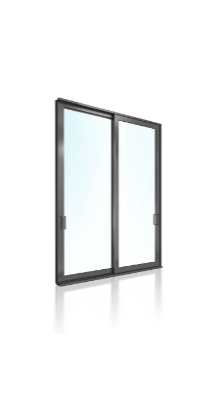
Homeowners in hurricane-prone regions often assume that an impact-rated door is automatically watertight once installed. The reality is more specific. Impact ratings primarily address resistance to windborne debris and structural wind pressure, while water resistance is a separate, though related, testing category that depends heavily on installation quality.
What Water Testing Actually Measures
Hurricane-rated doors undergo water infiltration testing designed to simulate wind-driven rain, not just standing water or light drizzle. One common method, ASTM E1105, applies water under pressure to replicate the horizontal force rain takes on during a storm. A failed test occurs when water passes beyond the innermost plane of the door assembly.
In Florida’s High-Velocity Hurricane Zones, which cover Miami-Dade and Broward counties, doors must pass a related but distinct protocol. This standard, known as TAS 202, cycles water at 15 psf of pressure for 15 minutes to confirm the assembly resists wind-driven rain under sustained storm conditions. Products sold in these zones also require a Miami-Dade Notice of Acceptance, confirming independent lab verification before installation is permitted.
Water Resistance Is Not the Same as Wind Rating
A door’s design pressure rating, which reflects how much wind load it can withstand, does not automatically indicate how well it resists water. Some testing standards make this distinction explicit. Under AAMA/WDMA/CSA 101/I.S.2/A440, water penetration resistance is tested at only 15 percent of the door’s positive design pressure rating, meaning the wind rating alone should not be read as a guarantee against water intrusion.
This is why a door can carry a high wind rating and still allow water infiltration if it was tested to a standard that does not weigh water performance as heavily, or if it was installed incorrectly.
Why Installation Determines Real-World Performance
Even a door engineered and lab-tested for water resistance can underperform in the field if installation details are overlooked. Experts from Impact Windows Center, Tampa, Florida, explain that sealing, flashing, and drainage paths around the frame are what actually stop water from reaching the interior during a storm, not the glass or panel alone.
Industry guidance following recent hurricane seasons has emphasized this point directly. Recovery advisories addressing water intrusion note that products without proper flashing and sealant integration are unlikely to perform as tested once installed in the field, regardless of their laboratory rating. Elevated sill risers, continuous sealant beads, and correctly lapped flashing layers are standard elements of a properly executed installation, and their absence is one of the most common causes of water intrusion complaints after a storm.
What Homeowners Should Verify Before Installation
Rather than relying on marketing language alone, homeowners evaluating hurricane doors should ask for the specific testing standards a product has passed, such as TAS 202 or ASTM E1105, along with documentation like a Florida Product Approval number or, in HVHZ counties, a Miami-Dade NOA. These documents confirm the assembly, not just the glass, was tested as a complete system.
It is also worth asking installers directly about sealing and flashing methods, since a correctly rated door installed without proper waterproofing details can still leak during a storm. Permits and inspections tied to impact door installation typically exist precisely to catch these gaps before a hurricane tests them for real.
The Full Picture Behind Storm-Ready Doors
Impact-rated doors are engineered to resist far more than flying debris, but water resistance is a distinct performance category with its own testing standards and installation requirements. A door’s ability to keep water out during a hurricane depends on the combination of its tested rating, the quality of its sealing system, and whether it was installed according to manufacturer specifications. Homeowners who understand this distinction are better equipped to evaluate products on substance rather than assumption, and to ask contractors the right questions before storm season arrives.
Impact Windows Center
3547 High Ridge Rd
Boynton Beach
Florida
33426
United States


