
Key Takeaways
- Beginners can start watercolor painting successfully with five key supplies: watercolor paint, watercolor paper, a water brush, a mixing palette, and a guided workbook.
- Watercolor paper is the single most impactful supply – using the wrong kind will buckle, bleed, and produce frustrating results no matter how carefully you paint.
- A guided workbook removes the blank page barrier that stops most beginners before they ever finish a piece.
Starting watercolor painting can feel overwhelming – dozens of brushes, paints, and papers crowd the market, each with its own confusing specs. The good news? Beginners don’t need most of it. Five supplies cover everything needed to go from zero to a finished painting, and knowing what each one does makes buying decisions far simpler.
Five Supplies Cover Everything You Need
Every watercolor painting involves the same core steps: applying pigment to a surface, controlling water flow, mixing colors, and following some kind of plan. The five key supplies – paint, paper, brush, palette, and workbook – map directly to those steps. Nothing on the list is filler, and nothing critical is missing.
Sourcing these five items individually takes research and a fair amount of guesswork. A detailed watercolor painting supplies guide can help beginners understand what each item does, which features matter, and how to choose the right materials without overspending.
Watercolor Paint: Start Small, Go Pigment-Rich
Watercolor paints come in two main forms: pans (small, dry cakes of pigment) and tubes (wet, concentrated pigment squeezed out before use). Both produce similar results, but they suit different situations. Pans are compact, less messy, and forgiving if you forget to close the lid. Tubes offer more intense pigment right away, which is useful for larger paintings or bolder color work.
Look for sets labeled student-grade rather than jumping straight to professional-grade. The priority is high pigment concentration – paints that look vivid and mix cleanly. Winsor & Newton Cotman is a frequently recommended starting point for beginners. A 12-color set hits the sweet spot: enough variety to cover a full color spectrum without overwhelming a beginner with too many choices.
Why Pans Are Often the Easiest Starting Point for Beginners
Pans require almost no prep. Open the case, wet the brush, touch the pigment – done. There’s no squeezing, no waste from paint drying on a palette before it’s used, and the compact format travels easily. For beginners building a consistent painting habit, lower friction matters more than marginal performance gains.
Why 12 Colors Works Well (And When Fewer or More Makes Sense)
Twelve colors give beginners access to warm and cool versions of the primaries, plus useful secondary tones, without creating decision fatigue mid-session. Many artists suggest focusing on a limited primary palette first to really learn how colors interact. Once mixing feels intuitive, expanding with individual tube colors makes more sense than buying a larger set upfront.
Watercolor Paper: The Supply That Matters Most
If there’s one supply worth spending a little more on, it’s the paper. Watercolor paper is engineered specifically to absorb water without warping and hold pigment cleanly. Regular printer paper or thin sketchbook sheets buckle the moment they get wet, creating pooling, uneven drying, and unpredictable edges – none of which reflect the painter’s actual skill level.
What 140 lb / 300 gsm Cold Press Actually Means
Paper weight describes thickness and durability. Here’s a quick comparison of the three common options:
- 90 lb (190 gsm): Budget-friendly but prone to buckling under wet washes. Fine for quick practice sketches.
- 140 lb (300 gsm): The beginner standard. Handles wet-on-wet techniques well without excessive warping. Widely recommended by instructors and experienced painters alike.
- 300 lb (640 gsm): Nearly warp-proof, but significantly more expensive. Better suited for finished pieces.
Cold press refers to the surface texture – slightly textured, which gives watercolor paint something to grip without being so rough it fights detail work. It’s the most versatile surface for learning. Student-grade options like Canson XL or Strathmore 400 Series at 140 lb work well for practice, while 100% cotton paper offers noticeably better performance as skills develop.
What Happens When You Use the Wrong Paper
Thin, non-absorbent paper warps under wet paint, causing pigment to pool in the buckled valleys rather than spreading evenly. Beginners using the wrong paper often assume they’re making technical mistakes – adjusting water ratios, changing brushwork, second-guessing everything – when the real problem is simply the surface. Starting on proper 140 lb cold press removes that variable entirely.
Watercolor Brushes: Your Primary Painting Tool
Brushes control how paint moves from palette to paper. For beginners, a small selection of round brushes in different sizes covers nearly every technique: broad washes, fine detail lines, and everything in between. Round brushes hold a good amount of water and snap back to a point, making them the most versatile shape to start with.
Water Brushes: Convenient for Portability, With Some Trade-Offs
Water brushes have a hollow handle that fills with water. Squeeze the barrel gently and water flows directly to the bristles – no separate water cup needed. For beginners painting at a desk, in a coffee shop, or outdoors, this dramatically reduces setup and cleanup. The mess factor that makes many people hesitant about watercolor practically disappears.
The trade-off is flow control. Water brushes release water continuously, which can feel different from the precise water-loading of a traditional brush dipped in a cup. Most beginners adapt quickly, and the portability benefit usually outweighs the adjustment period. For home studio work where a water cup is no inconvenience, traditional round brushes remain a strong option.
Mixing Palettes: More Room to Blend, More Control
A mixing palette is where colors come to life. While many beginner pan sets include a lid or small tray for mixing, a dedicated palette with deep wells gives significantly more control. The wells hold pigment and water separately so colors don’t bleed into each other, which matters when trying to hit a specific shade.
What to Look for in a Beginner Palette
The ideal beginner palette is compact enough to travel with but spacious enough to hold 12 or more pans with room to blend. Deep wells prevent colors from washing into each other; shallow or flat surfaces make it much harder to mix clean tones. Even simple options – a ceramic plate, a basic plastic palette with divided sections – outperform a pan-set lid for actual blending work. The goal is enough space to mix without things running together.
Guided Workbooks: A Highly Recommended Learning Aid
This one catches most beginners off guard, but a good guided workbook may be the highest-impact item on the list for building confidence fast. The most common barrier new painters hit isn’t technique – it’s the blank page. Staring at empty paper with no idea what to paint leads to procrastination, frustration, and eventually giving up entirely.
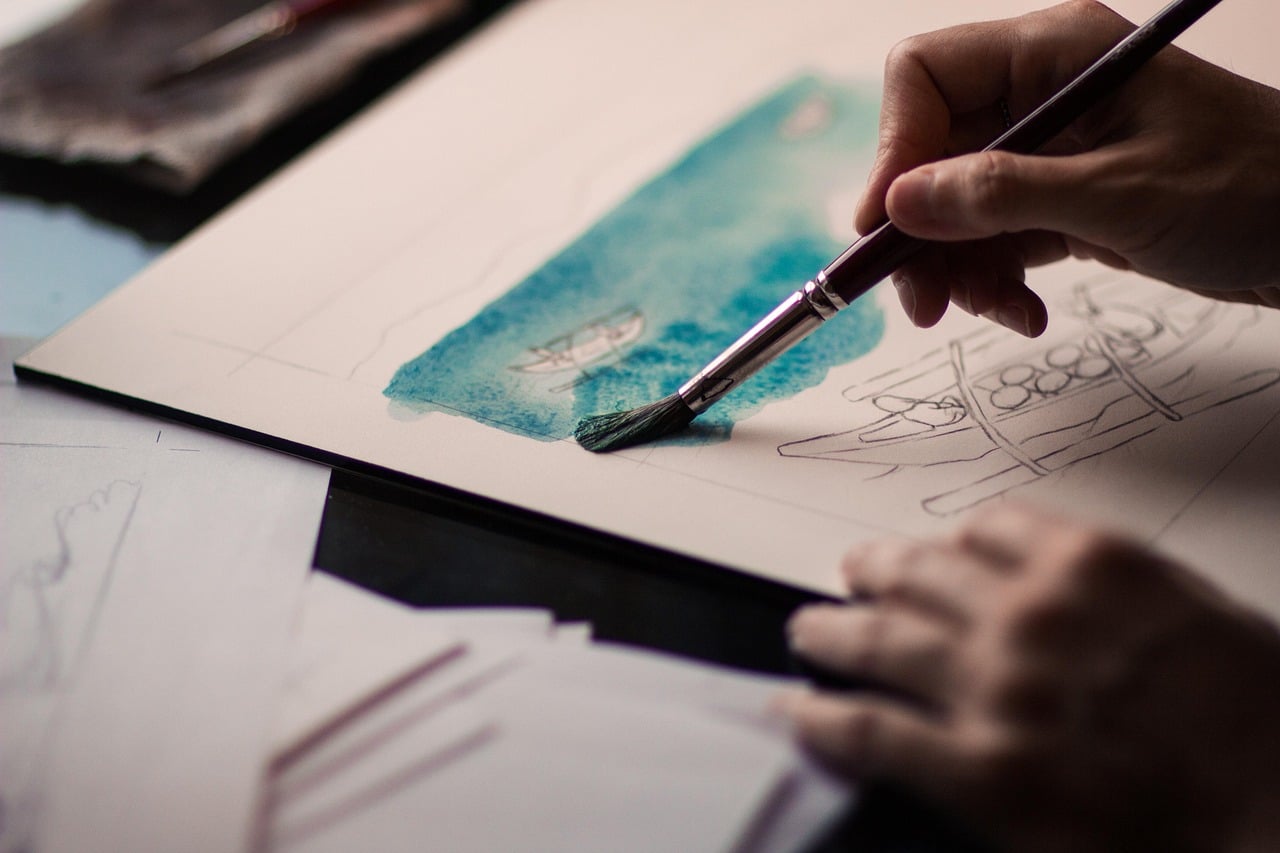
A guided watercolor workbook solves that directly. Pre-sketched illustrations are already on the page; the painter’s job is to add color. That structure removes the drawing barrier, keeps early sessions focused on watercolor technique, and produces a finished piece at the end – which does more for motivation than any tip or tutorial. Look for workbooks printed on quality paper with a range of subjects that progress in complexity. Beginners who felt they had no talent consistently describe workbooks as the thing that finally made watercolor click.
Starting watercolor doesn’t require an overflowing art studio or an expensive collection of supplies. A handful of well-chosen essentials is enough to build skills, develop confidence, and enjoy the creative process.
Tobio’s Kits
info@tobioshop.com
+1 (305) 257-6512
3833 Powerline Road
Ste 201
Fort Lauderdale
Florida
33309
United States


