
Malawi commissions first standalone utility-scale battery storage project to strengthen grid reliability and unlock energy access for households and businesses
PR Newswire
LILONGWE, Malawi, July 24, 2026
- The 20 MW battery storage facility, delivered in partnership with the Electricity Supply Corporation of Malawi (ESCOM) and the Global Energy Alliance, is backed by USD 20 million in catalytic grant financing.
- The landmark project will improve electricity reliability for households and industries and reduce carbon emissions by 10,000 tonnes annually.
- The project introduces the Alliance’s Grids of the Future programme, aimed at building resilient, modern power systems that support industrial growth and long-term energy security across Africa under Mission 300
LILONGWE, Malawi, July 24, 2026 /PRNewswire/ — The Electricity Supply Corporation of Malawi (ESCOM) Limited and the Global Energy Alliance for People and Planet have commissioned Malawi’s first standalone utility-scale Battery Energy Storage System (BESS), a landmark 20 MW / 40 MWh installation located in Kanengo, Lilongwe.
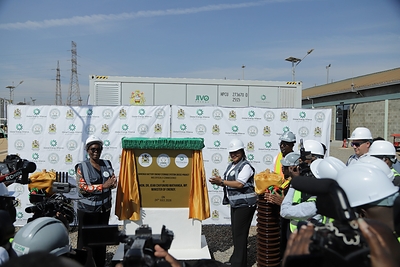
The commissioning ceremony, presided over by Hon. Dr. Jean Mathanga, Minister of Energy, marks a decisive step in the nation’s energy transformation. Supported by a USD 20 million grant from the Global Energy Alliance, the project stabilises the national grid, reduces reliance on costly diesel generation, and lays the foundation for a more resilient and reliable energy system.
Malawi’s electricity grid has long faced systemic challenges, including instability, high levels of renewable energy curtailment, dependence on hydropower and a costly reliance on diesel back-up generation. The Kanengo BESS directly addresses these structural constraints by storing energy and managing fluctuations, effectively unlocking about 100 MW of existing renewable generation capacity.
The facility will avoid over 10,000 tons of carbon emissions per year while improving energy access for households, commercial and industrial (C&I) sectors, and critical public services, and ensuring resilience to climate shocks. As part of the Global Energy Alliance BESS Consortium, a global initiative to scale battery storage across low- and middle-income countries, the project demonstrates how storage can be deployed to strengthen grid performance and build a pipeline of investable storage assets across Emerging Markets and Developing Economies (EMDEs).
The project forms part of the Alliance’s Grids of the Future initiative, which leverages digitalisation and distributed energy integration to leapfrog ageing infrastructure and build a resilient, future-ready power system. Rather than treating storage as a standalone technology, the facility reflects a strategic shift toward integrating BESS as core grid infrastructure, enabling more flexible power systems and modernising market design. It is also an opportunity to unlock a new revenue stream for Malawi through ancillary services, providing a critical foundation for long-term economic growth and market development as the region scales its renewable energy capacity.
“Today marks far more than the switch-on of a battery system – it marks the moment Malawi’s grid became smarter, stronger, and future-ready. For years, grid instability forced us to curtail renewable energy we had already generated and to fall back on costly diesel at the expense of our consumers and our climate commitments. The Kanengo BESS changes that calculus entirely. By storing and deploying power instantaneously, we are stabilising feeder voltages, reducing system losses, and unlocking about 100 MW of renewable generation that was previously constrained. This is not just an engineering achievement – it is the foundation for ESCOM’s transformation into a financially viable, high-performing utility capable of supporting Malawi’s target of 70% electricity access by 2030.” – Eng. William Kayipa, CEO, Electricity Supply Corporation of Malawi (ESCOM)
“Malawi has demonstrated that Africa does not have to choose between energy access and clean energy transition. With this 20 MW / 40 MWh BESS now operational, Malawi is unlocking about 100 MW of renewable capacity that would otherwise be stranded, cutting 10,000 tons of CO₂ per year, and building the technical foundations for lasting energy security. This is the Global Energy Alliance’s biggest BESS milestone in Africa to date – and we are proud to have delivered it in partnership with the Government of Malawi and ESCOM. It is proof that catalytic philanthropic capital, when deployed strategically, can de-risk transformative infrastructure and inspire far greater investment at scale.” – Woochong Um, CEO, Global Energy Alliance for People and Planet
“This project goes beyond batteries and megawatts – it is about what is possible when governments, financiers, and development partners align around a shared vision. Malawi’s BESS delivers reliable power for hospitals, schools, businesses, and homes without the interruptions, noise, fumes, and cost of diesel generators. It offers cleaner air, lower emissions, and a new standard for energy infrastructure in Africa. The rest of the continent is watching – and we are ready to help them replicate it.” – Carol Koech, Vice President for Africa, Global Energy Alliance for People and Planet
The project supports Malawi’s energy transition, defined within its National Energy Compact under Mission 300. It also anchors the Southern Africa BESS Centre of Excellence at Mzuzu University to support BESS skills development and knowledge sharing across the continent.
About ESCOM
The Electricity Supply Corporation of Malawi (ESCOM) is the national utility responsible for transmission, distribution and retailing of electricity in Malawi. ESCOM is committed to expanding access to reliable, affordable, and clean electricity for all Malawians.
About the Global Energy Alliance for People and Planet
Global Energy Alliance for People and Planet is a global nonprofit that builds public, private and philanthropic partnerships (PPPPs) to accelerate clean energy and economic opportunity. Founded in 2021 by The Rockefeller Foundation, IKEA Foundation and Bezos Earth Fund, we build the technical, financial and institutional foundations that make clean energy investable and scalable across emerging economies. Our work is anchored in two mutually reinforcing global pillars that together address the market fragmentation that has historically slowed down progress on energy access and economic development: Grids of the Future and Powering Opportunity. Our Grids of the Future work strengthens energy supply through AI-enabled, renewables-ready power grids. Powering Opportunity builds demand, helping people harness clean energy to power businesses, create jobs and drive economic growth. Together, these pillars create a reinforcing cycle of abundant energy and economic opportunity.
With 130 projects across Africa, Asia and Latin America and the Caribbean, we are on track to reach 91 million people with clean energy, create or improve more than 3 million jobs and prevent nearly 300 million tons of carbon emissions. For more information, please visit www.energyalliance.org and follow us on LinkedIn.
Media contacts:
ESCOM Public Relations Department
Global Energy Alliance for People and Planet, media@energyalliance.org
 View original content to download multimedia:https://www.prnewswire.com/news-releases/malawi-commissions-first-standalone-utility-scale-battery-storage-project-to-strengthen-grid-reliability-and-unlock-energy-access-for-households-and-businesses-302834257.html
SOURCE The Global Energy Alliance for People and Planet


