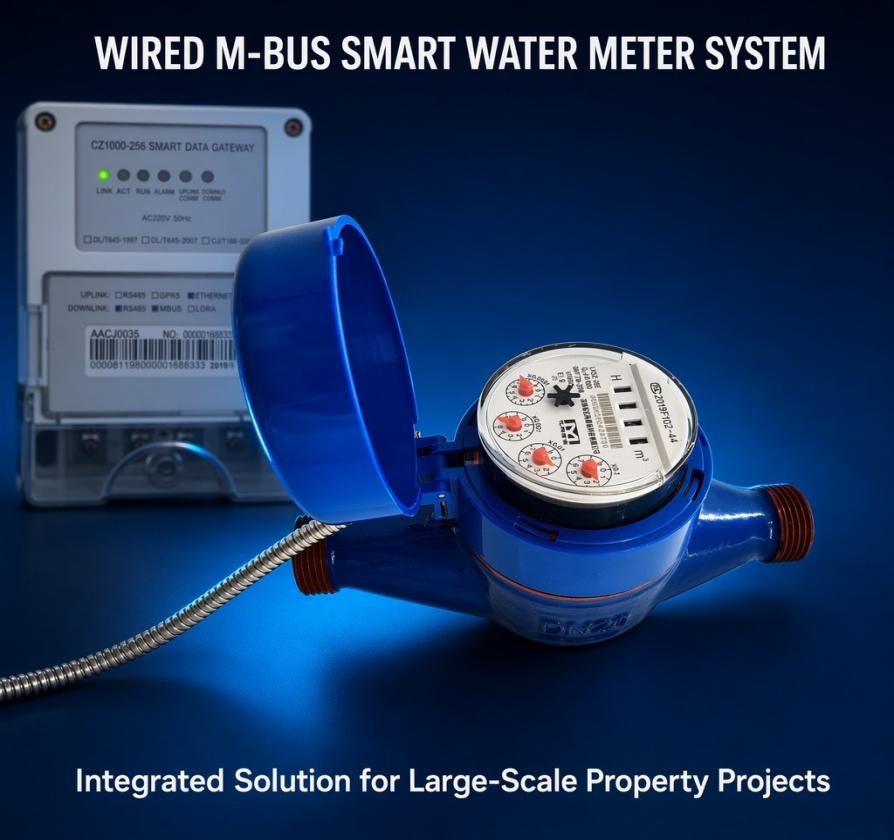

SHENZHEN, GUANGDONG, CHINA, November 27, 2026 /EINPresswire.com/ — A LoRaWAN water meter should be selected first for the water it measures, then for the network carrying its readings. For buyers evaluating DIYU Smart as a LoRaWAN water meter supplier, the practical starting points are water temperature, flow range, installation conditions, and data requirements. A hot-water riser and a cold-water service connection may use the same communications technology while requiring different meter specifications.
Shenzhen Diyu Smart Co., Ltd. supplies smart water and electricity meters, smart locks, and building IoT products for contractors, system integrators, and brand owners. Its catalog includes LoRaWAN hot- and cold-water meters alongside gateways. This product range gives buyers a starting point for discussing both the measuring device and the equipment needed to collect its readings.
Start with Water Temperature at the Meter
Choose the temperature rating from conditions at the actual installation point. The distinction between hot and cold water concerns the meter’s measurement capability, materials, and operating limits; adding wireless communication does not change those requirements.
DIYU Smart lists the AAWX3008 LoRaWAN hot water meter with a 90°C designation and a DN15-DN50 size range. These catalog specifications identify a candidate range for hot-water applications. For a quotation, the selected diameter and configuration should have documentation confirming the permitted water temperature, pressure, and installation conditions.
The catalog separately lists a LoRaWAN cold water meter range spanning DN15-DN300. That range covers multiple nominal diameters, rather than one universally interchangeable product. The selected cold-water configuration needs its own temperature rating and dimensional drawing.
A useful project schedule records normal and maximum water temperatures at each metering point. Where thermal disinfection or another temporary temperature increase is planned, include that condition in the specification. Ambient temperature around the electronics also needs separate consideration: a water-temperature designation does not establish the operating limits of the radio module or battery.
Match the Flow Range Before Choosing the Connection Size
Select the meter for expected demand across its measuring range, then confirm the connection details. Matching the pipe diameter alone does not establish whether a smart water meter will measure the intended consumption effectively.
Two useful quantities are Q₁, the minimum flow rate within the specified measurement-error limits, and Q₃, the permanent flow rate. The ratio Q₃/Q₁ describes the span between those values. These quantities help buyers compare meters that share a nominal diameter but have different measuring ranges.
For individual apartment branches, low-flow performance may deserve particular attention. A building service connection may need greater capacity for simultaneous demand. Neither application should be selected from diameter alone.
For each proposed DIYU Smart meter, request the size-specific flow values, accuracy class, pressure-loss information, and permitted mounting orientation. Compare those details with estimated minimum, normal, and peak demand. The assessment should establish that the expected operating conditions fall within the documented limits.
For hot-water circulation systems, define what the meter is intended to measure. Water passing through a circulation loop is different from water consumed at an outlet. The metering arrangement must support the intended allocation or monitoring method.
Check the Installation Space and Service Conditions
A suitable meter needs to fit the pipework and remain accessible throughout its service life. A replacement project can become more expensive if the chosen body length or connection arrangement requires unplanned pipe alterations.
The installation drawing should show overall length, connection type, flow direction, mounting orientation, and any required straight pipe sections. It should also leave room for isolation valves, union removal, display inspection, and servicing of replaceable components.
For a basement or meter pit, assess possible flooding and condensation. If an IP68 enclosure is proposed, obtain the immersion conditions covered by the relevant test documentation. The designation alone does not describe every possible depth or duration of submersion.
Hot-water installations introduce another practical issue: insulation. The proposed insulation arrangement should follow the meter manufacturer’s instructions and preserve access to parts that require inspection or maintenance. A sample installation can reveal clearance problems before the layout is repeated across a building.
Treat Wireless Communication as a Separate Selection Decision
A wireless water meter needs both suitable measuring performance and a workable route for delivering readings. LoRaWAN is a low-power wide-area networking technology; its communication features should be evaluated separately from the meter’s hydraulic specifications.
DIYU Smart’s range includes the Milesight UG65 gateway, and its FAQ identifies gateways as part of its LoRaWAN metering arrangements. For a proposed package, confirm the meter’s regional frequency plan, network activation requirements, and compatibility with the selected network server.
Receiving a radio message is only one part of integration. The receiving application also needs the information required to decode the payload-the meter’s encoded data-and associate readings with the correct property or account. Agree on units, cumulative-volume scaling, timestamps, reporting intervals, and any supported status fields.
Coverage should be checked at the intended installation points, particularly inside metal cabinets or below ground. Battery-life estimates should identify the assumed reporting schedule, temperature conditions, and communication settings. Those assumptions provide a more useful comparison than an isolated service-life claim.
Compare Quotations Around an Identified Configuration
Comparable quotations identify the same installation duty, supplied components, and acceptance requirements. A low meter price can become difficult to assess when gateways, software access, installation accessories, or commissioning support are priced separately.
For a mixed hot- and cold-water project, organize the inquiry into four parts:
Meter schedule: application, quantity, nominal diameter, water temperature, pressure, and expected flow range.
Installation requirements: drawings, connections, orientation, available space, and environmental exposure.
Data requirements: frequency plan, gateway arrangement, platform interface, reporting schedule, and required readings.
Commercial scope: included accessories, supporting documents, sample arrangements, warranty terms, and replacement options.
For example, a project considering the AAWX3008 hot-water range and a separate cold-water configuration should receive clearly identified references for each. Similar radio requirements do not justify treating the two meter specifications as interchangeable.
Where meters will support billing or measure drinking water, obtain the destination-specific metrological and water-contact documentation applicable to the quoted models. General company credentials cannot establish approval for every configuration.
Validate the Sample from Measurement to Recorded Data
Approve a sample against written criteria that cover both measurement and data handling. A successful connection demonstration does not establish that every reading will be recorded correctly by the project’s software.
Metrological acceptance should rely on applicable verification documentation or competent testing under defined flow, temperature, and orientation conditions. A commissioning check can then compare the meter register with decoded readings in the receiving platform, accounting for reporting delay and display resolution.
A site pilot should also show how missing reports are identified and what happens when connectivity returns. The required behavior should be documented rather than assumed. For installations with restricted access, the pilot is also an opportunity to check display visibility, component identification, and the practical maintenance procedure.
These checks turn the quoted product into a configuration that purchasing, installation, and operations teams can evaluate together.
FAQ
Can a hot-water meter also measure cold water?
A hot-water meter may cover cold-water temperatures if its documented operating range permits them. For the AAWX3008 or another proposed model, confirm the complete temperature range and approval scope rather than relying only on the upper temperature designation.
Does a LoRaWAN water meter measure heat consumption?
A water meter measures volume. Measuring thermal energy requires an appropriate heat-metering arrangement, including temperature measurements. A LoRaWAN radio does not turn a volume meter into a heat meter.
Can hot- and cold-water meters share one gateway?
They may share a gateway when their regional radio settings and network requirements are compatible. Payload decoding and device identification must also work correctly for both meter types in the receiving application.
What should an initial inquiry to DIYU Smart include?
Include the destination market, hot- and cold-water quantities, temperature and pressure conditions, pipe details, expected flow range, installation drawings, and platform requirements. This information gives the supplier a practical basis for proposing specific configurations.
Discuss the Metering Schedule with DIYU Smart
For a project combining hot- and cold-water measurement, send DIYU Smart a separate schedule for each application. Request identified meter configurations, dimensional drawings, operating limits, integration information, and a quotation showing the included equipment. Review an assembled sample and its recorded data before approving bulk supply. Product inquiries can be submitted through https://www.diyusmart.com/.
Diyu Smart
Diyu Smart
email us here
Legal Disclaimer:
EIN Presswire provides this news content “as is” without warranty of any kind. We do not accept any responsibility or liability
for the accuracy, content, images, videos, licenses, completeness, legality, or reliability of the information contained in this
article. If you have any complaints or copyright issues related to this article, kindly contact the author above.

Media gallery