

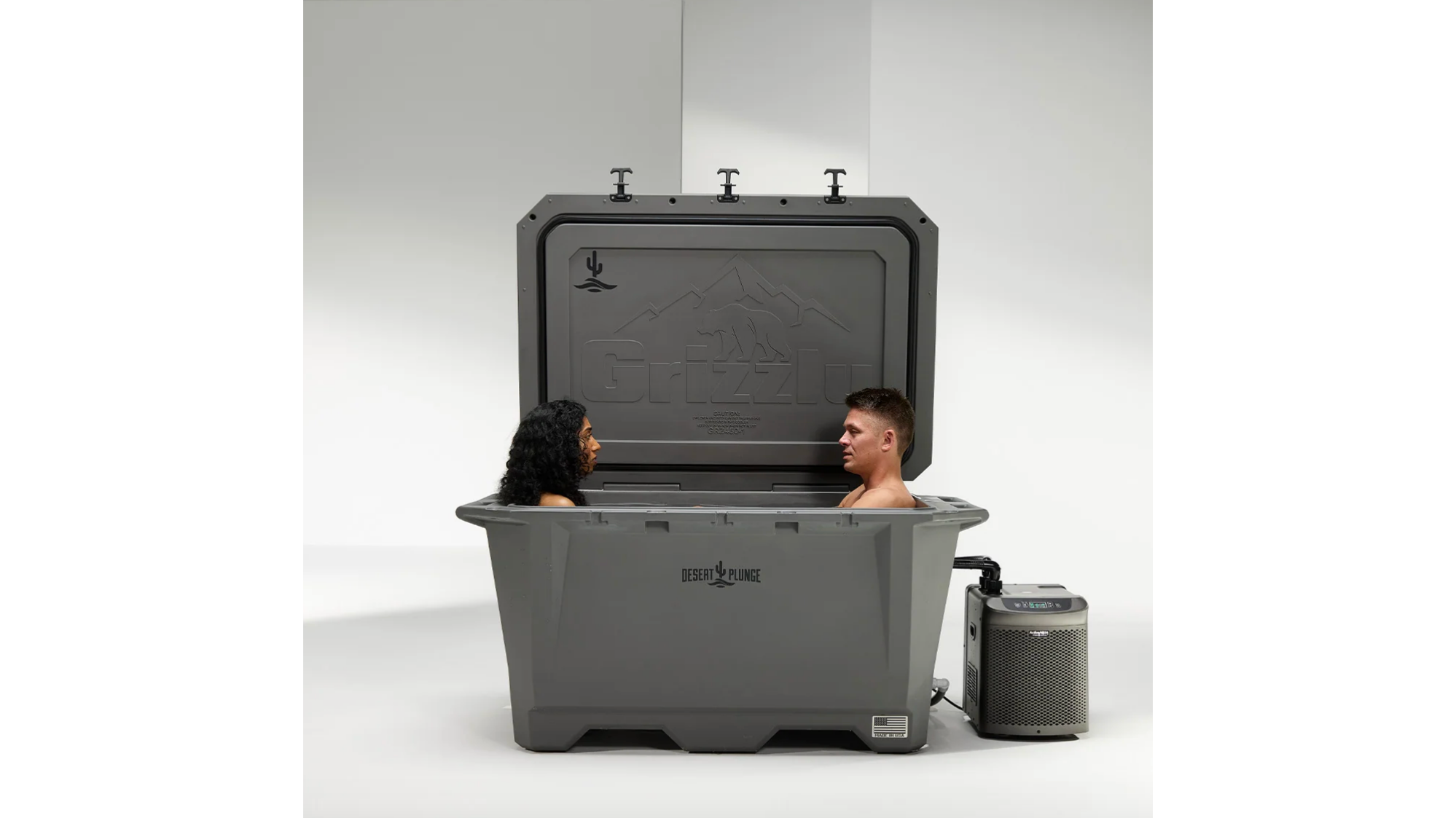
Key Takeaways
- Ice is a simple, low-cost way to try cold plunging without buying specialized equipment, letting occasional users control how much ice goes into the tub each time
- Repeated ice use means buying, storing, carrying, and adding bags before every session, and water temperature can swing depending on how much ice is used and how fast it melts
- A chiller lets a plunger set a target temperature and cool the water toward it, cutting out the guesswork of estimating bags of ice
- Both setups still need upkeep: ice baths require water changes and cleaning, while chillers call for filter care and water-quality checks
- The right choice often comes down to one question: how many times a week does the plunge actually happen
Deciding how to chill a plunge tub often comes down to a simple fork in the road: grab bags of ice from the store, or invest in a machine that does the cooling automatically. Both paths lead to the same cold water, but they ask different things of the person using them. Time, money, storage space, and patience all factor in differently depending on the route chosen.
Ice or Chiller: What Fits Your Routine?
The honest answer depends on how often the tub gets used. Someone testing out cold plunging for the first time doesn’t need the same setup as someone who plunges four or five mornings a week. Frequency changes the math on cost, convenience, and how much manual work feels worth it.
The decision often hinges less on preference and more on habit: ice suits an experiment, while a chiller suits a routine that has already taken hold. Readers weighing both options can get a sense of what a dedicated chiller setup looks like by browsing cold plunge tubs built for steady, repeatable temperatures.
Before committing to either path, it helps to think through how the two options behave over the course of weeks and months, not just on day one. A single ice bath feels almost identical to a single chiller session, since cold water is cold water. The differences show up in the repetition.
Ice: The Low-Commitment Starting Point
Ice remains the easiest on-ramp into cold plunging, mostly because it requires nothing more than a container, cold tap water, and a trip to the store.
Why Beginners Reach for Bags First
A bathtub, stock tank, or basic container filled halfway with cold water and topped off with about three large bags of ice can get a beginner into genuinely cold water without buying a single piece of specialized equipment. A thermometer, rather than a hand dipped in the water, is the better way to confirm the temperature actually matches what’s needed, since guessing by feel tends to be unreliable. This approach answers a question that matters more than any spec sheet: does cold plunging feel worth repeating? For someone still unsure whether the habit will stick, ice provides a flexible, low-stakes way to find out, with no long-term commitment attached.
The Repeat Work Ice Creates
The friction shows up once the first few sessions turn into a weekly habit. Ice has to be bought, hauled home, stored somewhere cold, and carried to the tub before every single plunge. None of that is difficult on its own, but it adds up into a small chore that happens before the actual practice even begins. Temperature consistency suffers too: the water’s final chill depends on how much ice went in and how quickly it melted that day, so one session might run noticeably colder or warmer than the last. For occasional plunges, that variation barely registers. For someone trying to build a steady routine, it can start to feel like an obstacle standing between them and the water.
How a Chiller Changes the Routine
A chiller takes the guessing out of the equation by cooling water toward a chosen temperature rather than depending on however much ice happens to be on hand that day.
Set It and Skip the Guesswork
Instead of estimating bags and checking a thermometer each time, a chiller holds the water at a set point and keeps it there. That consistency matters for two different kinds of plungers: beginners who want a gradual, predictable way to build up tolerance, and frequent users who treat cold exposure as part of a recovery routine and want the same experience every time. Once the water reaches its target, the chiller’s compressor cycles off rather than running nonstop, with how often it restarts depending on factors like insulation, the lid, ambient temperature, and sun exposure. A well-insulated tub with a solid lid asks less of the compressor, which plays directly into both energy use and the day-to-day feel of maintaining a chiller setup.
Weighing Upfront Cost Against Ongoing Effort
Money and effort trade places depending on which option gets chosen, and that trade-off is really the heart of the decision.
Ice usually costs less to start, since there’s no equipment to purchase beyond a tub or container. The ongoing cost comes from the ice itself; a rough personal estimate can be built by multiplying bags per session by the price per bag and the number of sessions planned each month. For someone plunging once or twice a month, that math rarely adds up to much. For someone plunging several times a week, the recurring ice runs start to resemble a subscription with no end date.
A chiller flips that structure. The upfront cost is higher, since it involves buying a piece of equipment rather than a bag from the store. A cold plunge built for hot climates, such as Desert Plunge’s, costs thousands less than competing tubs that struggle in the heat, which changes the math on that higher starting price. Over time, that cost may be offset by skipping repeated ice purchases and cutting out the prep work each session used to require. The ongoing expense shifts from ice to electricity, with the actual cost depending on the chiller’s power draw, how many hours the compressor runs, and local electricity rates. A unit that runs continuously for a full day will naturally use more electricity than one that reaches its target and then cycles down, which is another reason insulation and lid quality matter as much as the chiller itself.
Upkeep Doesn’t Disappear With Either Choice
Neither option is maintenance-free, even though the type of upkeep looks different depending on the setup.
Ice Baths Still Need Cleaning
An ice-only tub still needs its water changed regularly and the container itself kept clean. Skipping this step doesn’t save much time in the long run, since a neglected tub becomes less pleasant to use and may need a more thorough cleaning later anyway.
Chillers Need Filter and Water Care
A chiller shifts the maintenance workload toward the equipment itself: filters need cleaning, and water quality needs occasional checking to confirm the system is working as expected. This kind of upkeep tends to happen on a schedule rather than before every session, which is part of what makes a chiller feel more hands-off day to day, even though the equipment itself asks for periodic attention.
Questions That Should Drive Your Decision
A few straightforward questions can cut through most of the back-and-forth:
- How many times per week does the plunge actually happen, realistically, not aspirationally?
- How easy and affordable is it to buy ice regularly in the area?
- How much setup effort before each session feels acceptable versus annoying?
- Is there willingness to maintain a piece of equipment, including filters and occasional checks?
Answering these honestly tends to point toward one option more clearly than any list of pros and cons could on its own.
The Real Difference Is Frequency, Not Price
Price matters, but it isn’t really what separates these two options at the core. The real divide is how often cold plunging happens and how much manual work feels sustainable session after session. Ice works well for occasional use or for anyone still deciding whether the habit will last. A chiller suits a routine that has already proven itself, trading a bigger upfront investment for fewer repeated trips to the store and a more predictable plunge every time. For anyone ready to move from testing the waters to building a steady practice, it may be worth considering cold plunge tubs designed for consistent, repeatable chilling as the next step.
Desert Plunge
info@desertplunge.com
+1 480 271 9966
1826 West Broadway Road
#7
Mesa
Arizona
85202
United States