
Key Takeaways
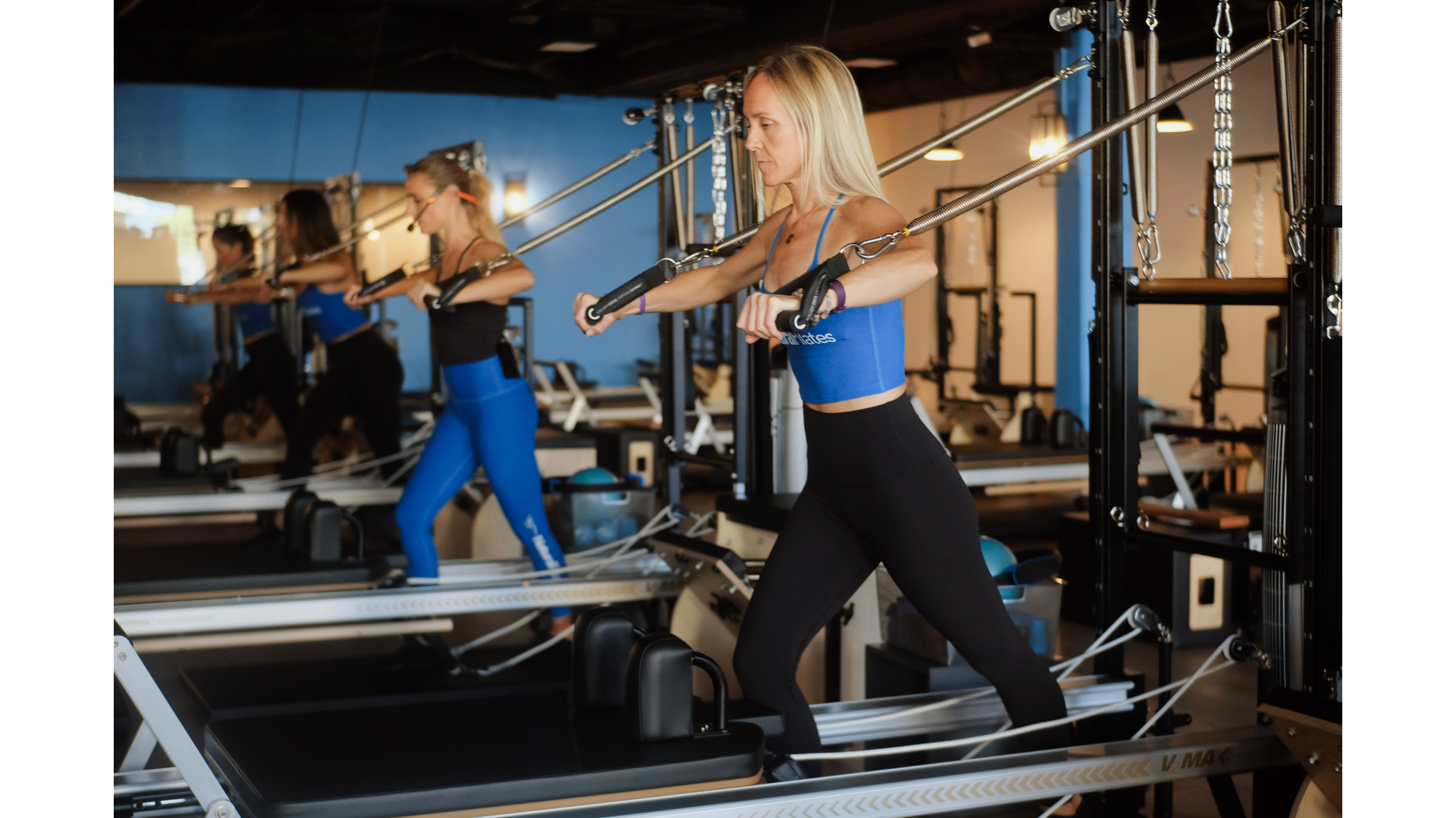
- Pilates challenges muscles using body weight, reformer spring tension, or added weights, which can help them adapt and get stronger over time
- Muscular strength, endurance, and size are three different outcomes, and Pilates tends to improve the first two more reliably than the third
- Beginners often see the biggest early changes because their muscles are adapting to a new kind of challenge for the first time
- Progressive overload, gradually increasing load or volume, is harder to measure on a reformer than with a barbell, which is one reason many people pair the two
- Reformer and mat classes can be structured with built-in ways to raise the challenge as students get stronger
Plenty of Lincoln Square residents walk into their first Pilates class wondering if it can actually build muscle, or if it mainly improves flexibility and posture. The honest answer sits somewhere in the middle, and understanding why takes a quick look at how muscles actually grow and adapt.
Yes, But It Depends What You Mean
Pilates counts as a legitimate form of strength training. It uses resistance, whether that is body weight, spring tension on a reformer, or added dumbbells and ankle weights, to challenge muscles, and challenged muscles respond by getting stronger. That much is settled.
The term “building muscle” can mean a few different things, and Pilates does not deliver on all of them equally. “Someone hoping for visibly bigger muscles will have a different experience than someone hoping to feel stronger carrying groceries up a walk-up on West End Avenue,” says a Pilates instructor from Natural Pilates – Upper West Side, NY. “The method works best when treated as a genuine strength practice rather than a gentle stretching session.”
Getting a clear answer means separating three outcomes that often get lumped together: strength, endurance, and size. Each responds differently to Pilates-style training, and knowing the difference helps set realistic expectations before stepping onto a reformer or mat.
Strength, Endurance, and Size Aren’t the Same
Muscular strength is the ability to produce force. Muscular endurance is the ability to keep producing that force over time without quitting. Muscle size, often called hypertrophy, is the physical growth of muscle tissue itself. These three outcomes overlap, but they do not always move together, and Pilates tends to favor two of them more than the third.
Pilates is particularly effective at building muscular endurance, and it can improve strength when the exercises are genuinely challenging. Where it tends to fall short, compared to traditional weight training, is in producing substantial increases in muscle size. That is not a flaw in the method; it simply reflects how Pilates applies resistance. Research has found that regular Pilates practice over several months can increase the size of specific muscles, including the abdominal wall, so size gains are not impossible. They just tend to be modest compared to what dedicated resistance training produces.
Why Beginners See the Biggest Changes
Anyone newer to structured exercise is likely to notice strength and muscle changes faster during their first months of Pilates. The reason comes down to adaptation: muscles that have not been challenged before respond quickly to almost any new demand placed on them, whether that demand comes from a reformer, a barbell, or a resistance band.
That early progress is real and worth celebrating, but it also tends to level off. Once the body adapts to a given routine, further gains require a bigger or different challenge. This is where many Lincoln Square Pilates-goers start asking whether they have hit a ceiling, and the next section explains why that ceiling exists in the first place.
Why Pilates Has a Resistance Ceiling
The core principle behind any kind of strength gain is progressive overload: gradually increasing the load or volume placed on a muscle so it keeps facing something new. Progressive overload is simple to apply with a barbell, since adding five or ten pounds to a bar is a straightforward, measurable change. Pilates makes that same kind of steady, trackable increase more difficult to achieve.
Reformer Springs vs. Mat Bodyweight Limits
Reformer springs provide real resistance, and shifting to a heavier spring setting does increase the challenge of an exercise. The springs do not offer the same fine-grained, easily measured progression that a set of dumbbells or a loaded barbell provides, which can make it harder to know exactly how much harder a workout has gotten from one week to the next.
Mat Pilates faces an even lower ceiling. Exercises performed with just body weight, or with light hand weights, run out of room to get harder fairly quickly for anyone who trains consistently. That does not make mat work less valuable for building endurance and control, but it does explain why some longtime practitioners eventually look for extra ways to keep challenging their muscles.
Ways to Make Pilates More Challenging
Plateaus are not a dead end. A handful of adjustments can push Pilates workouts closer to true progressive overload, keeping muscles guessing and continuing to adapt.
Add Bands, Ankle Weights, or Dumbbells
Layering external resistance onto mat exercises is one of the most direct ways to raise the stakes. A resistance band during glute bridges or light ankle weights during leg work both add load beyond what body weight alone provides. The key is choosing a weight that still allows clean technique; a weight too heavy to control safely defeats the purpose and raises the risk of injury.
Slow Your Tempo for More Time Under Tension
Moving more slowly through each repetition keeps muscles working longer per rep, a concept known as time under tension. This approach fits naturally with Pilates, since the method already emphasizes controlled, deliberate movement rather than speed. Stretching out the lowering phase of a roll-down or the hold at the top of a leg lift can turn a familiar exercise into a noticeably harder one.
Raise Spring Resistance on the Reformer
Choosing a heavier spring, or adding an extra spring to a given exercise, is the reformer equivalent of picking up a heavier dumbbell. It will not offer the same precise, incremental jumps that a weight rack does, but it remains one of the most reliable ways to increase difficulty within a reformer-based class.
Track Your Progress to Spot Plateaus
Progressive overload only works if there is a way to tell whether anything has actually changed. Keeping a simple record helps answer that question. Consider tracking:
- Spring resistance level used for key exercises
- Weight of any added dumbbells or ankle weights
- Number of repetitions completed with good form
- Perceived difficulty, rated on a simple scale from easy to very hard
If none of those numbers have budged in several weeks, that is a signal to increase resistance, slow down further, or add a few more repetitions, always while keeping technique sharp. Sloppy form in pursuit of a harder workout tends to backfire.
When Weight Training Fills the Gap
For Lincoln Square residents whose main goal is building noticeably larger muscles, dedicated weight training remains the more direct route. Traditional resistance training allows for straightforward, steady increases in load, which is exactly the variable that drives significant muscle growth over time. Pilates can certainly support that goal, but it was never designed to replace heavy lifting as the primary tool for maximizing size.
The two methods complement each other well. Pilates builds core stability, body awareness, and the kind of controlled movement patterns that make heavier lifts safer and more efficient, since better alignment means the right muscles are doing the work instead of compensating movements creeping in. Weight training, in turn, supplies the progressive overload that Pilates alone has a harder time delivering. Someone who already works out two to three times a week in the weight room might find that adding Pilates improves lifting form and reduces nagging aches, while someone who does Pilates several times a week but wants bigger strength gains might add one or two weight sessions to keep progressing.
The Bottom Line for Getting Stronger
Pilates counts as strength training, and for many people, especially those newer to structured exercise, it can build real strength, muscular endurance, and even some modest muscle growth. Expecting it to produce the same scale of muscle size as years of dedicated weightlifting sets up unrealistic expectations, since the resistance tools involved simply do not scale the same way.
The most practical approach treats Pilates and weight training as teammates rather than competitors. Lincoln Square residents chasing better posture, core control, and functional strength may find that Pilates alone covers their goals, especially if they consistently raise the challenge using heavier springs, added resistance, or slower tempos. Those chasing bigger, more dramatic muscle gains will likely want to fold in regular weight training alongside it.
Either way, starting with a class built around progressively challenging movement provides a solid foundation to build from.
Natural Pilates – Upper West Side, NY
info@naturalpilates.com
2091 Broadway 10023
3rd & 4th Floor
New York
NY
10023
United States


