Whistler Guided Tour Experience by Star Sightseeing Showcases Sea-to-Sky Corridor Attractions
Vancouver, Canada – June 10, 2026 / Star Sightseeing /
For Immediate Release
WHISTLER, BRITISH COLUMBIA – June 10, 2026
Star Sightseeing Showcases Whistler’s Top Attractions with Curated Tour Experiences
Star Sightseeing has outlined its Whistler sightseeing program as part of a structured approach to regional tourism along British Columbia’s Sea-to-Sky Corridor, where organized travel services continue to support visitor movement between Vancouver and major mountain destinations. The update reflects ongoing developments in guided tour operations, where demand for coordinated day trips has increased among domestic and international travelers seeking access to Whistler’s alpine environment without independent transportation.
The company’s Whistler tour offering is designed around a full-day guided itinerary that connects several key regional landmarks, including Shannon Falls Provincial Park, the Sea-to-Sky Gondola, and Whistler Village. The route follows the Sea-to-Sky Highway, a corridor recognized for its coastal mountain landscapes, glacial formations, and forest ecosystems that define much of British Columbia’s natural tourism appeal.
Tour operations emphasize structured transportation and guided interpretation, with passengers traveling in coach vehicles equipped for long-distance sightseeing. The itinerary is arranged to provide scheduled stops at major viewpoints and attractions, allowing visitors to observe both natural and recreational features of the region in a single-day format. Industry observers note that such curated travel models have become increasingly common as tourism operators respond to demand for simplified access to high-traffic destinations.
Star Sightseeing described the Whistler program as part of its broader tourism approach focused on organized regional access and visitor experience coordination. A company spokesperson stated, “The Whistler route allows visitors to experience key highlights of the Sea-to-Sky region in a structured and accessible format.”
Structured Whistler Tour Operations Along the Sea-to-Sky Corridor
Star Sightseeing’s Whistler tour program is structured as a coordinated day excursion linking Vancouver with one of British Columbia’s most visited alpine regions. The operational model is based on a fixed itinerary that organizes transportation, sightseeing stops, and guided interpretation into a single continuous travel experience. This format is increasingly used within regional tourism systems where visitor flow between urban and mountain destinations requires efficient scheduling and managed mobility.
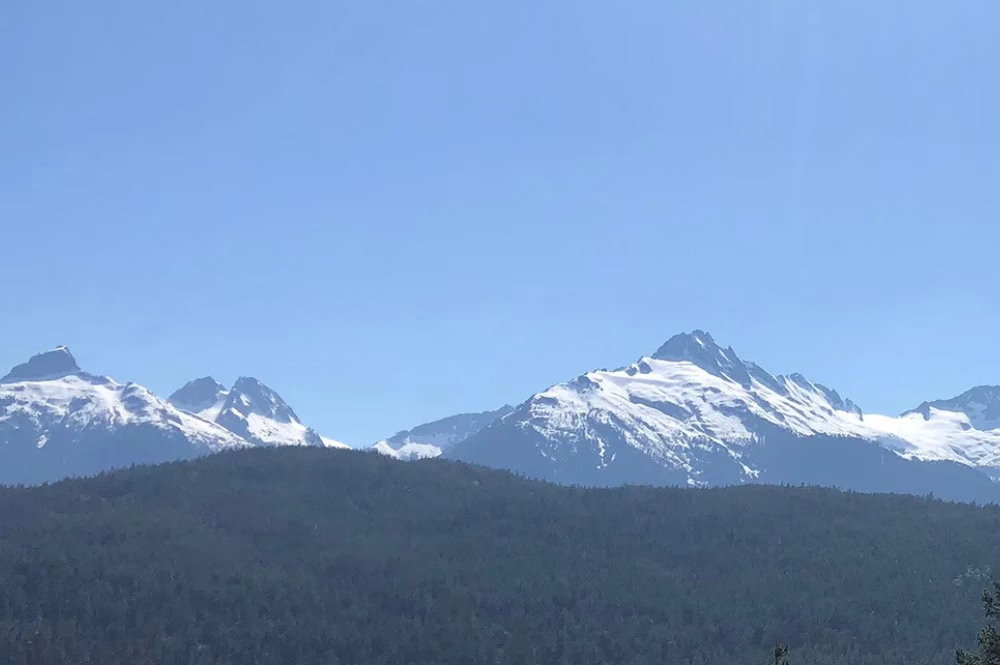
The tour operates as a full-day route covering key points along the Sea-to-Sky Corridor, with Whistler serving as the primary destination. The structure allows passengers to experience multiple geographic and environmental zones in one journey, including coastal shorelines, temperate rainforest regions, and high-altitude mountain landscapes. The itinerary is designed to maintain consistent timing between stops, supporting both accessibility and route reliability for visitors with limited travel time in the region.
Guided commentary is provided throughout the journey, offering context on regional development, geological formations, and environmental characteristics. The approach aligns with broader tourism practices in British Columbia where interpretation is integrated into transportation-based sightseeing services. The model supports both educational and recreational travel functions, positioning the tour as part of a wider framework of organized visitor experiences across the province.
Coastal-to-Alpine Transit Route Through British Columbia’s Scenic Corridor
The Sea-to-Sky Highway serves as the primary transportation route for the Whistler tour, connecting Vancouver with the mountain communities of Howe Sound and the Whistler Valley. The corridor is recognized for its transition from coastal environments to alpine terrain, providing a continuous visual shift in geography throughout the journey.
As part of the guided route, passengers travel through areas characterized by steep cliffs, ocean inlets, and forested mountain slopes. The highway passes several natural reference points that illustrate the region’s geological evolution, including evidence of glacial activity and volcanic formations that shaped the surrounding landscape over time. These features form a consistent part of the interpretive framework delivered during the tour.
The structured travel format allows for planned stops at designated viewpoints, enabling observation of key natural features without disrupting the overall schedule. This approach supports efficient movement through a region that experiences significant seasonal visitor traffic while maintaining controlled timing between destinations. The corridor itself functions as both a transportation link and a scenic attraction, reinforcing its role in British Columbia’s tourism infrastructure.
Shannon Falls Provincial Park as a Defined Natural Observation Point
Shannon Falls Provincial Park is included as a scheduled stop within the Whistler tour itinerary, offering visitors access to one of the most prominent waterfall sites along the Sea-to-Sky Corridor. The location is characterized by a series of cascading water flows descending from the surrounding coastal mountains into the valley below.
The park provides designated viewing areas and short walking paths that allow visitors to observe the falls from multiple perspectives. Its accessibility from the highway makes it a consistent feature in regional sightseeing routes, particularly for tours that emphasize natural landmarks within structured timeframes.
From a geological perspective, Shannon Falls reflects long-term water erosion patterns influenced by mountain runoff and seasonal precipitation. The surrounding forest ecosystem contributes to the site’s ecological profile, with dense vegetation typical of British Columbia’s coastal rainforest zone.
Within the tour structure, the stop is allocated a limited timeframe to maintain alignment with the overall itinerary. This ensures that visitors can experience the site while continuing the scheduled progression toward Whistler. The inclusion of Shannon Falls highlights the integration of natural heritage sites into organized tourism circuits along the corridor.

Sea-to-Sky Gondola Access and Elevated Viewing Perspectives
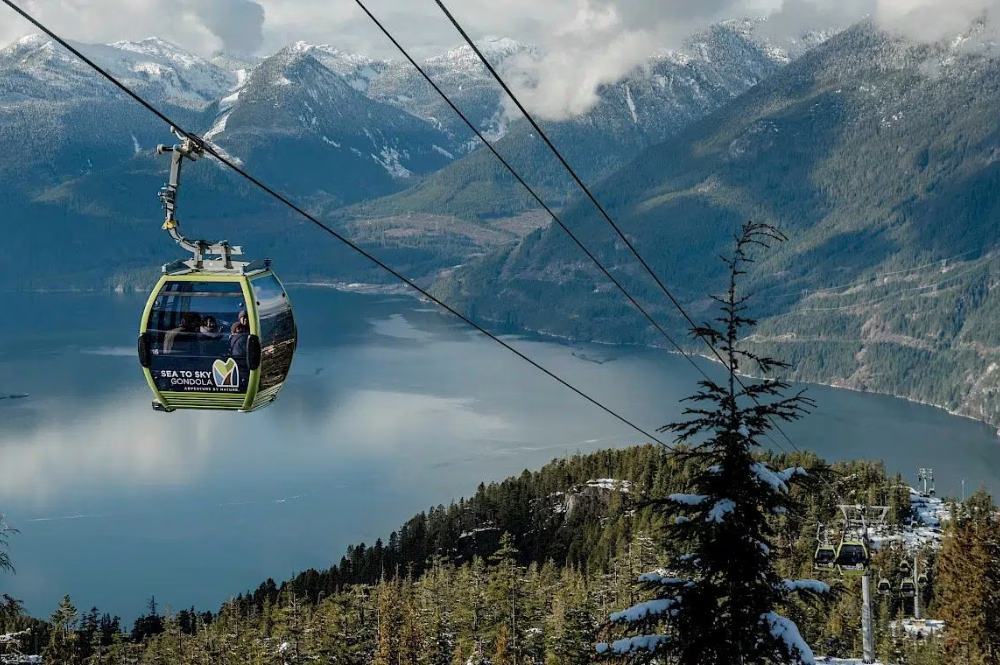
The Sea-to-Sky Gondola forms a key elevated viewing component of the Whistler tour, providing access to high-altitude perspectives of Howe Sound and the surrounding mountain ranges. The gondola system transports visitors from the base area to a summit region where panoramic observation points and walking trails are available.
At the summit, visitors encounter a network of viewing platforms that highlight the region’s steep terrain, forest canopy, and coastal waterways. The elevated position offers a visual overview of the broader Sea-to-Sky Corridor, allowing for observation of both natural formations and transportation routes below.
The infrastructure is designed to support year-round access, although its inclusion in the tour is aligned with seasonal operational schedules. The system plays a role in regional tourism by connecting ground-level travel routes with mountain-based viewpoints, creating a layered sightseeing experience.
Within the guided itinerary, the gondola segment functions as a central observational phase of the journey. It provides a structured opportunity for visitors to engage with the alpine environment from a different elevation, reinforcing the geographic diversity of the Whistler region within a single travel sequence.
Whistler Village as a Central Alpine Community Hub
Whistler Village serves as the final major stop within the tour itinerary and functions as a central pedestrian-oriented community located within the alpine resort region. The village is characterized by a network of walkable streets, commercial areas, and public gathering spaces designed to support both tourism and local activity.
The area provides access to dining establishments, retail outlets, and open plazas, allowing visitors structured free time within a defined geographic zone. Seasonal variations influence the village environment, with activity levels and visitor patterns changing between winter and summer operational periods.
From a tourism infrastructure perspective, Whistler Village operates as a hub that connects recreational, cultural, and service-based functions within the broader resort municipality. Its design supports high visitor throughput while maintaining a contained and navigable layout for short-term stays.
Within the tour schedule, the village stop is allocated as a flexible period, enabling visitors to explore at their own pace before rejoining the return transportation segment. This structured pause within the itinerary provides a transition between guided sightseeing and the concluding phase of the journey back to Vancouver.
Guided Transportation Systems and Onboard Travel Conditions
The Whistler tour utilizes structured coach transportation as the primary mobility system for the full-day itinerary. Vehicles used for the route are configured to support extended travel durations, incorporating seating arrangements and onboard amenities designed for passenger comfort during scenic transit.
The transportation model includes coordinated pickup points in Vancouver, followed by continuous travel along the Sea-to-Sky Corridor. This system reduces the need for individual navigation and consolidates visitor movement into a single managed schedule. It also ensures alignment between scheduled stops and overall tour timing.
Onboard conditions are structured to support long-distance sightseeing, with attention to visibility and route engagement. Large viewing windows allow for continuous observation of surrounding landscapes throughout the journey. The driver and guide coordination model ensures that both operational safety and informational delivery are maintained across the route.
This transportation framework forms the logistical backbone of the tour, enabling the integration of multiple destinations into a single organized itinerary. It reflects a standardized approach to regional sightseeing operations where mobility and interpretation are combined within a unified service structure.
Regional Tourism Patterns and Structured Visitor Flow Management
The Whistler tour is positioned within broader tourism patterns that characterize travel activity along British Columbia’s coastal and mountain regions. Visitor movement between Vancouver and Whistler is a consistent component of seasonal travel behavior, particularly along the Sea-to-Sky Corridor, which functions as a primary access route to inland alpine destinations.
Structured tour operations contribute to managed visitor flow by organizing transportation, scheduling, and site access into coordinated systems. This approach supports the distribution of travelers across key attractions, reducing concentration at individual sites while maintaining predictable travel sequences.
The integration of multiple landmarks into a single itinerary reflects a broader operational model within regional tour services, where efficiency and accessibility are prioritized. It also allows for standardized visitor experiences across diverse geographic environments, ranging from coastal waterways to mountain summit zones.
The Whistler route exemplifies this model by connecting natural attractions, recreational spaces, and transit infrastructure within a single day-based structure. This alignment between transportation and tourism activity illustrates how organized sightseeing services function within British Columbia’s broader visitor economy.


Contact Information:
Star Sightseeing
328 Industrial Avenue Unit 317
Vancouver, BC V6A 2P3
Canada
Star Sightseeing
+1 604-685-7827
https://starsightseeing.com/


Original Source: https://starsightseeing.com/media-page.php#/